It’s natural for skin to change over time. However, take a pause before dismissing every change as part of the natural aging process. When a mole starts to look different or a new spot appears without an apparent cause, it’s worth taking a closer look.
Melanoma is one of the most serious forms of skin cancer, but it is also highly treatable when identified early. Understanding what to look for, and knowing when to seek a professional evaluation, can provide windows for more effective treatment earlier.
If you’ve been researching symptoms of melanoma cancer, then clear, reliable information is an essential first step. In this guide, our team in Johnson County, KS, at Kansas City Skin & Cancer Center walks through the early signs of melanoma, how to recognize changes in your skin, and when it’s important to consult with a dermatologist.
With the right knowledge and timely care, you can protect your skin health with greater confidence and clarity.
A Look Ahead
- What Is Melanoma?
- The Early Signs of Melanoma
- How to Do an At-Home Skin Exam
- When to See a Dermatologist
- What to Expect at Your Skin Check
What Is Melanoma?
Melanoma is a type of skin cancer that develops in melanocytes, the cells responsible for producing pigment in the skin. While less common than other forms of skin cancer, it accounts for a higher percentage of skin cancer-related deaths because of its ability to spread rapidly if not detected early.
Many cases of melanoma are linked to ultraviolet (UV) radiation exposure, particularly from the sun. However, melanoma does not develop exclusively in sun-exposed areas.
It can also appear in less visible locations, including:
- On the scalp
- Under the nails
- Inside the nose
- In the eyes
Who Can Get Melanoma?
Many people have misconceptions about their risk. While people with lighter skin tones or older individuals may have a higher risk, melanoma can affect people of all ages and skin types.
Because of this, awareness and routine skin monitoring are important for everyone.
If you have questions about the symptoms of melanoma cancer, scheduling a consultation with a dermatologist in Johnson County, KS, gives you a chance to discuss the facts about this skin condition with a trusted professional.
Why Early Melanoma Detection Matters
When skin cancers, like melanoma, are found early, providers can often use simpler, less invasive, and more effective treatments.
Delayed diagnosis can mean more aggressive cancers—including melanoma—have time to spread. This means treatment requires larger surgeries or more complex interventions. Detecting melanoma at its earliest stage offers the best chance of a full recovery.
The Early Signs of Melanoma
The symptoms of melanoma cancer can vary in appearance, and the locations where it develops may change dramatically from case to case. This is why becoming familiar with common warning signs is so important.
Some common symptoms can include:
- A mole that changes in size, shape, or color
- A new growth on the skin
- Redness or swelling beyond the border of a mole
- Itching, tenderness, or discomfort
- A sore that does not heal
- Pigmentation spots with uneven or irregular edges
While melanoma has many appearances, some warning signs are easier to spot during regular skin cancer self-checks. Specifically, you should examine your skin monthly, looking for the ‘ABCDEs’ of melanoma.
The ABCDEs
| Letter | What It Means | What to Look For |
| A | Asymmetry | One half doesn’t match the other |
| B | Border | Irregular, scalloped, or blurred edges |
| C | Color | Multiple colors or uneven distribution in one spot |
| D | Diameter | Larger than ~6mm (pencil eraser-size) |
| E | Evolving | Changes in size, shape, color, or symptoms |
Additional Warning Signs You Might Miss
Though the ABCDEs are an excellent way to assess spots on the skin, some other visual symptoms of melanoma cancer may be easier to miss. Make sure to check for these spots too.
The ‘Ugly Duckling’
Most benign moles look similar to one another. A spot that stands out as noticeably different from surrounding moles may warrant further evaluation.
‘Where the Sun Doesn’t Shine’
Melanoma can develop anywhere on the body, including places where the ‘sun doesn’t shine.’ This includes under the nails, on the soles of the feet, or on the scalp. These areas are often overlooked during routine self-checks.
Red, White, and Blue Hues
Melanoma is often depicted as dark-brown moles, but it can actually present in a variety of colors. A lesion with multiple colors or an unusual hue should be examined by a skincare professional.
Spots on the Skin That Bleed or Itch
If a mole on the body itches or becomes more painful and tender, it is important to get it checked out. The same goes for when the surface of a mole changes, like if it bleeds or takes on a ‘scalier’ appearance.
What You Can Do at Home
Regular at-home self-exams are a simple way to watch for unusual growths or changes in the skin early and monitor your skin between professional visits in Johnson County, KS. Performing a monthly skin check helps you become familiar with your baseline and identify changes more easily.
What to Do During an At-Home Skin Check
To start your skin self-exam, find a quiet place and gather a few supplies.
What you’ll need:
- A bright light
- A full-length mirror and a hand mirror
- Two chairs or stools
Once your supplies are gathered, you can begin your self-exam:
- Examine your face: Look around the nose, lips, mouth, and ears—front to back.
- Inspect your scalp: Thoroughly inspect your scalp, using a mirror to look at each section.
- Check your hands: Look at the palms and backs, between the fingers, and under the fingernails.
- Scan your arms: Standing in front of the mirror, begin at the elbows and scan all sides of your arms and underarms.
- Inspect your torso: Focus on the neck, chest, and abdomen. Lift the breasts to view the underside.
- Scan your upper back: With your back to a mirror, use the hand mirror to look at the back of your neck, shoulders, upper back, and lower back.
- Inspect your legs: Sit down on the chair or stool, and use the hand mirror to carefully examine the front and sides of the legs, thighs, and shins. Finish by inspecting the ankles and feet, including the soles, toes, and toenails.
When to See a Dermatologist
If you notice a skin lesion or mole that fits one of the ABCDE guidelines or the ‘ugly duckling’ rule, or if you see a new mole or skin lesion, it is important to schedule an appointment with a dermatologist who has experience diagnosing and treating melanoma.
Identifying new or changing moles or lesions is key to early detection and diagnosis. If you are concerned about an area on your skin, make an appointment. If you think your skin is showing symptoms of melanoma cancer, make an appointment. Never hesitate to ask for a second opinion if you think it’s warranted.
What to Expect During a Professional Skin Check
As part of a complete early detection strategy, experts recommend that you see a dermatologist once a year for a skin check, or more often if you have a high risk of skin cancer. Skin checks are the best method for catching skin cancer early and beginning treatment rapidly.
To help you prepare and make the most of your skin check appointment, you can take a few steps before:
- Perform a self-exam and come to your appointment with notes about any new, changing, or unusual spots you want to point out to your dermatologist.
- Remove nail polish from your fingers and toes to allow your dermatologist to examine the fingers, nails, and nail beds properly.
- Wear your hair down. This allows your dermatologist to get a good look at your scalp.
- Pack makeup remover or remove any makeup before your exam, so the skin of your face is easier to examine.
- Ask questions. This is your chance to get valuable advice and insight from a professional specifically trained in skin conditions.
During the Dermatologist Exam
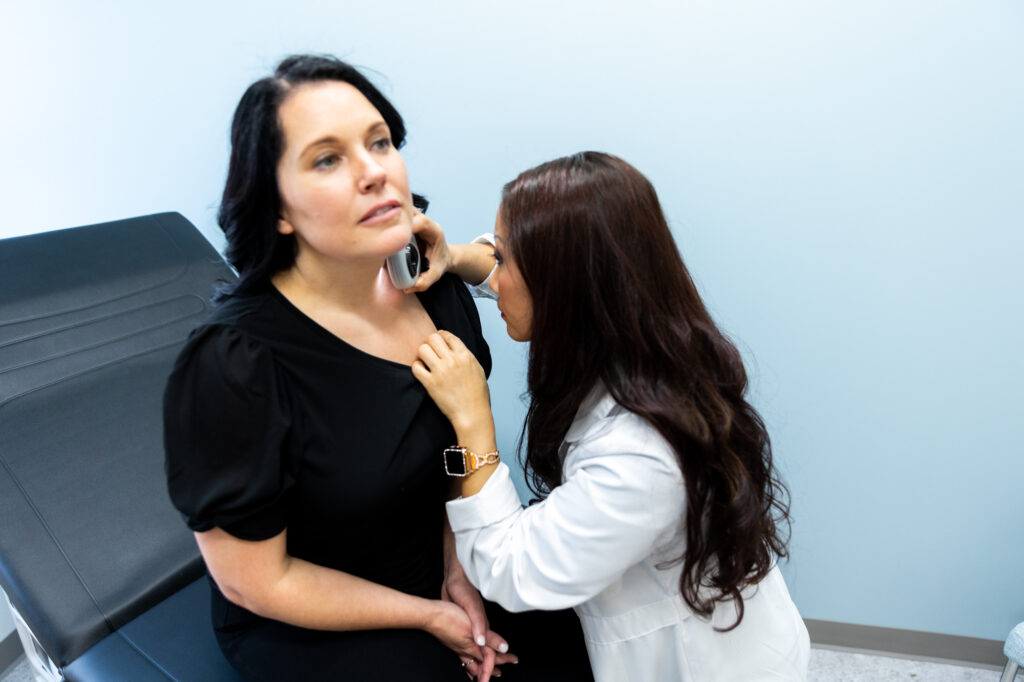
If you have never had atypical moles or skin cancer, your skin check will be short, usually about 10 minutes. Your dermatologist will thoroughly evaluate your skin from head to toe, paying close attention to hard-to-see spots like the scalp, back, behind the ears, and even between the toes.
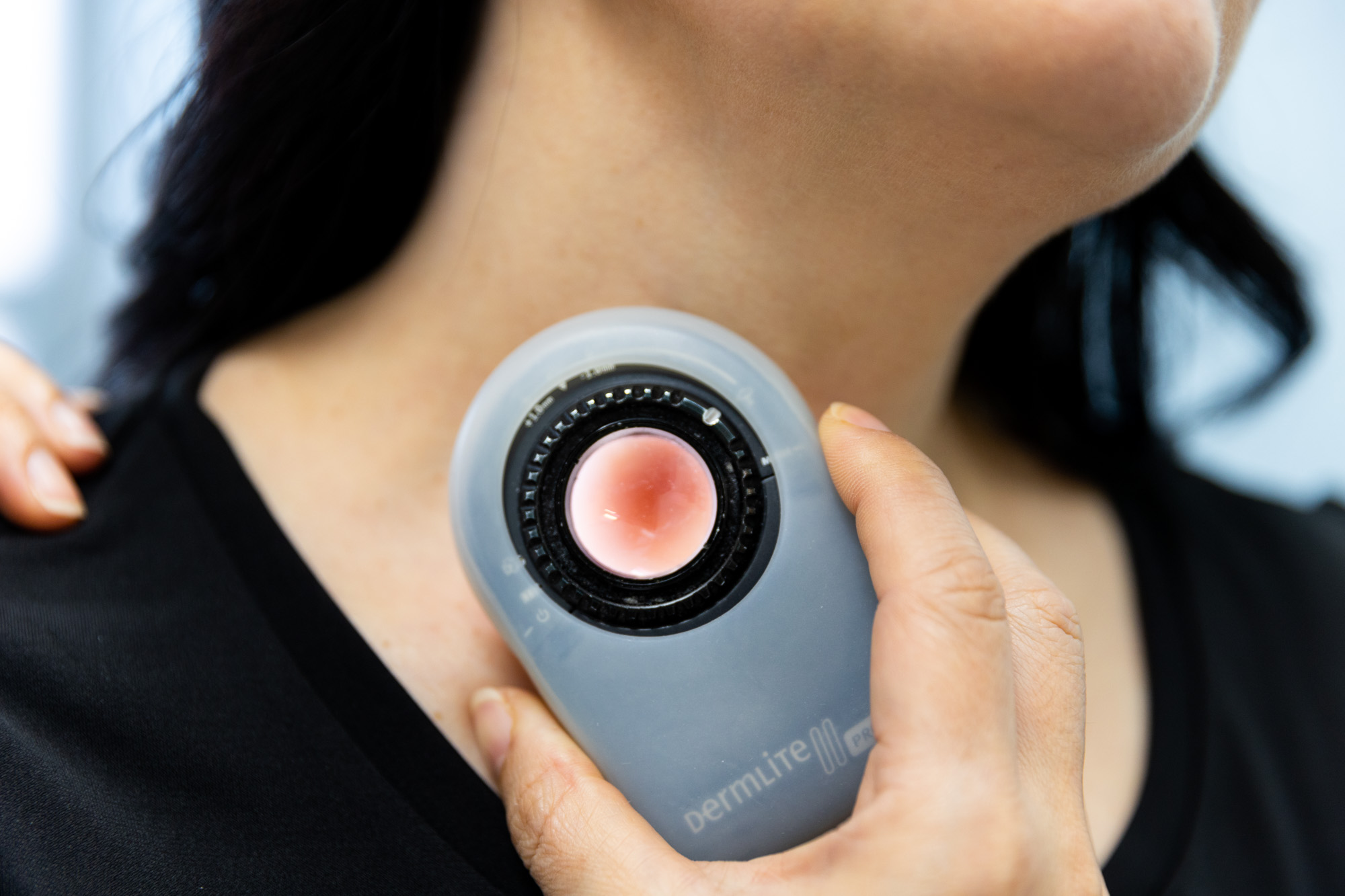
Your dermatologist may use a small handheld magnifying device called a ‘dermatoscope’ that visualizes the outer surface of the skin and the layer beneath it. They may biopsy one or more suspicious spots.
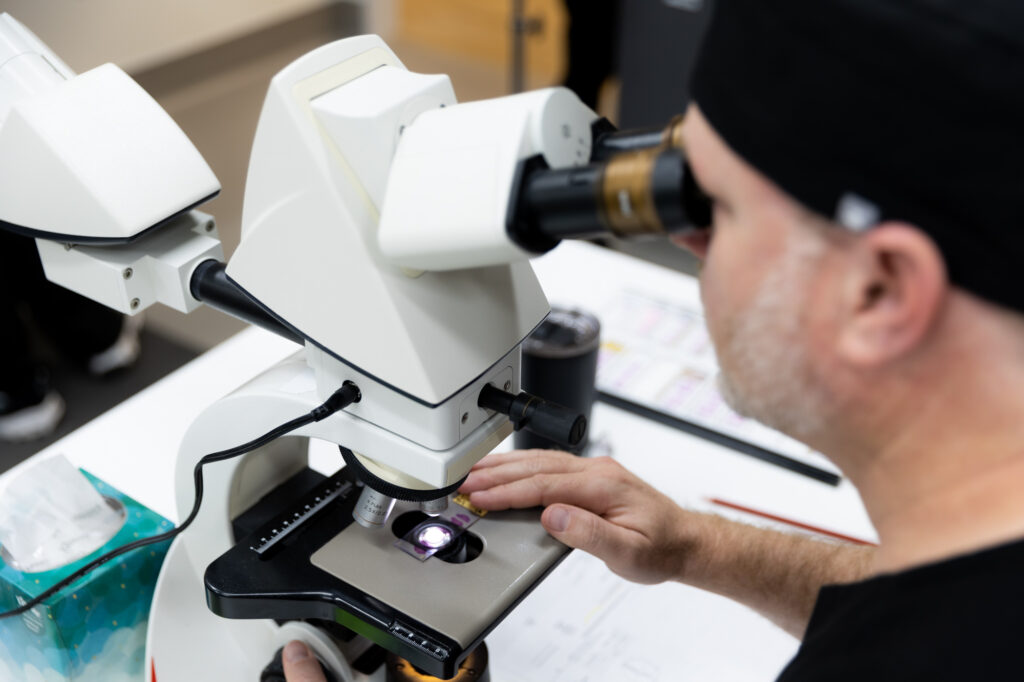
A biopsy usually means removing part of or all of the lesion and analyzing it in a lab to evaluate whether it is cancerous. Remember, early detection of skin cancer like melanoma is the key to the most minimal and cost-effective skin cancer treatment with the highest chance of a cure.
If you have noticed any of the symptoms of melanoma cancer, or want to take a proactive approach to skin health, make an appointment for a skin check.
Take a Proactive Approach to Skin Cancer Detection
Recognizing the early signs of melanoma is an important part of protecting your long-term skin health. While not every change in your skin is cause for concern, patterns such as evolving moles, irregular borders, or unexpected color variations should not be ignored.
If you’ve noticed changes that match any of the symptoms of melanoma cancer in Johnson County, KS, a professional evaluation can provide clarity and peace of mind. At Kansas City Skin & Cancer Center, our team takes a thorough, patient-focused approach to both skin cancer detection and care.
If you have questions about a spot or would like a professional skin check, contact our office and schedule a consultation. Taking a proactive step today can make a meaningful difference in your skin health.
Contact Us
Virtual Consultation