Hearing the words “skin cancer” can feel overwhelming, especially when you’re unsure what it really means or how the different types may affect your health. While skin cancer is common, it’s not one single condition.
Taking the time to understand the differences between subtypes helps you recognize potential concerns earlier and feel more confident in your next steps. If you’ve been researching types of skin cancer in Johnson County, start with clear, medically accurate information.
In this blog, our team at Kansas City Skin & Cancer Center walks you through how these types of skin cancer differ and what to look out for. With a better understanding of symptoms and severity, you can prepare to take action as soon as you notice warning signs.
Different Skin Cancer Types at a Glance
| Type | Severity Level | Most Common Appearance | Growth Pattern | Typical Treatment |
| Basal Cell Carcinoma | Low | Pearly bump, translucent lesion | Slow-growing | Excision, Mohs surgery |
| Squamous Cell Carcinoma | Moderate | Scaly patch, crusted sore | Can grow deeper | Excision, Mohs surgery |
| Melanoma | High | Dark, irregular mole | Can spread quickly | Surgical removal, advanced care |
Basal Cell Carcinoma (BCC)
Basal cell carcinoma is the most common form of skin cancer, accounting for roughly 80% of all cases. It forms in the basal cells, which are housed in the lower part of the epidermis. Although it rarely spreads to other areas of the body, it can grow deeper into surrounding tissue if not treated.
What BCC May Look Like
- Pearly/shiny bumps
- Red scaly patches
- Pink growths with rolled edges
- Non-healing sores that scab and bleed
BCC is most often found on sun-exposed areas such as the face, scalp, and neck.
Squamous Cell Carcinoma (SCC)
Squamous cell carcinoma is the second most common type of skin cancer. It develops in the squamous cells, which are in the upper layers of the skin. SCC is more likely to spread to other parts of the body than BCC, but it is still highly treatable when detected early.
What SCC May Look Like
- A rough, scaly, or crusted patch
- A firm, raised growth
- A wart-like lesion
- An open sore that may bleed or fail to heal
Like BCC, SCC most frequently develops on skin with regular sun exposure. This includes the face, ears, and neck.
Melanoma
Melanoma is a serious form of skin cancer that starts in melanocytes, the cells responsible for skin pigmentation. While less common than BCC and SCC, melanoma is more dangerous because of its potential to spread to other parts of the body.
What Melanoma May Look Like
- A new or changing mole
- An asymmetrical shaped spot
- A spot with irregular or uneven borders
- Multiple colors within one spot
- Moles or lesions with a diameter larger than a pencil eraser
The symptoms of melanoma cancer may also appear in areas not regularly exposed to the sun. This makes thorough routine skin checks especially important.
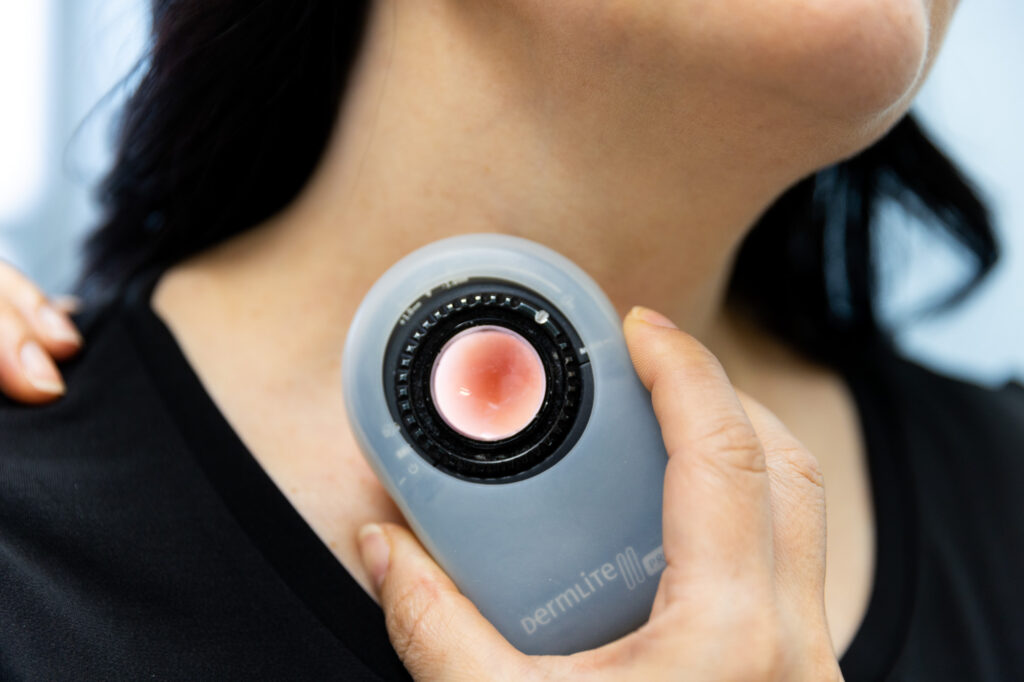
Early Detection Starts Here. Schedule Your Appointment Now.
Understanding the differences between the most common types of skin cancer helps you recognize changes in your skin and know when to seek care. While BCC, SCC, and melanoma have unique characteristics, early detection makes the most difference for your long-term health.
If you’re trying to understand your risk for different types of skin cancer in Johnson County, expert guidance can give you answers. At Kansas City Skin & Cancer Center, each patient receives a thorough evaluation and care plan tailored to their specific skin health needs.
If you’ve noticed a new or changing spot, or want to take a proactive approach to your skin health, schedule a consultation.