PRP injections have become an increasingly popular option in both medical and aesthetic dermatology as a natural way to support healing and regeneration. However, many patients still have questions about what the treatment actually involves.
At Kansas City Skin & Cancer Center, we know informed patients make the most confident decisions in their care. Any care journey should start with clear, medically accurate information about the treatment and how it fits into your overall care plan.
If you’ve been researching PRP injections in Johnson County, KS, it’s helpful to know what you can expect before scheduling your first appointment. In this blog, we’ll break down:
- What PRP injections are
- How PRP injections work
- What you should know before choosing this treatment
Keep reading to get expert answers.
What is PRP?
PRP, or platelet-rich plasma, is a concentrated portion of your own blood that we can apply to support healing and repair. The platelets in our blood naturally contain growth factors that support tissue regeneration.
By isolating and concentrating these platelets, PRP allows us to deliver a targeted healing signal directly to a treatment area.
What does PRP treatment involve?
There are a few steps in the PRP process:
- Your provider draws a small sample of your blood.
- Your blood spins at high speed in a centrifuge to separate platelets and plasma from red blood cells.
- Your provider carefully places the concentrated platelet-rich plasma into the targeted area.
The entire process, from initial blood draw to injection, typically only takes about an hour. Because it uses your own blood without additives, PRP treatment has a low risk of side effects.
Depending on your treatment goals, your provider may recommend a series of sessions to achieve optimal results.
What can PRP treat?
PRP is used in both restorative and aesthetic treatments because it supports the body’s natural healing response. In dermatology applications, PRP can improve skin quality, support hair growth, and assist in recovery following certain procedures.
At Kansas City Skin & Cancer Center, we use PRP to:
- Address hair thinning and hair loss conditions
- Support post-treatment healing to enhance recovery
- Soothe inflammatory skin conditions, including eczema, psoriasis, and lupus-related skin changes
- Even out pigmentation concerns, such as melasma and vitiligo
In hair restoration specifically, research continues to support promising results. Studies show that PRP increased hair density and thickness in people diagnosed with androgenic alopecia. Another study found that PRP can successfully treat female pattern hair loss.
Is PRP right for you?
Determining your eligibility for PRP starts with a thorough consultation. While PRP is a safe and minimally invasive treatment for many patients, it does not suit everyone.
Individuals with certain medical conditions, like active infections, uncontrolled blood disorders, or current cancer diagnoses, may not be candidates for PRP therapy.
In these cases, your provider can recommend alternative treatment options that better align with your health needs and safety.
Start Your Personalized PRP Plan
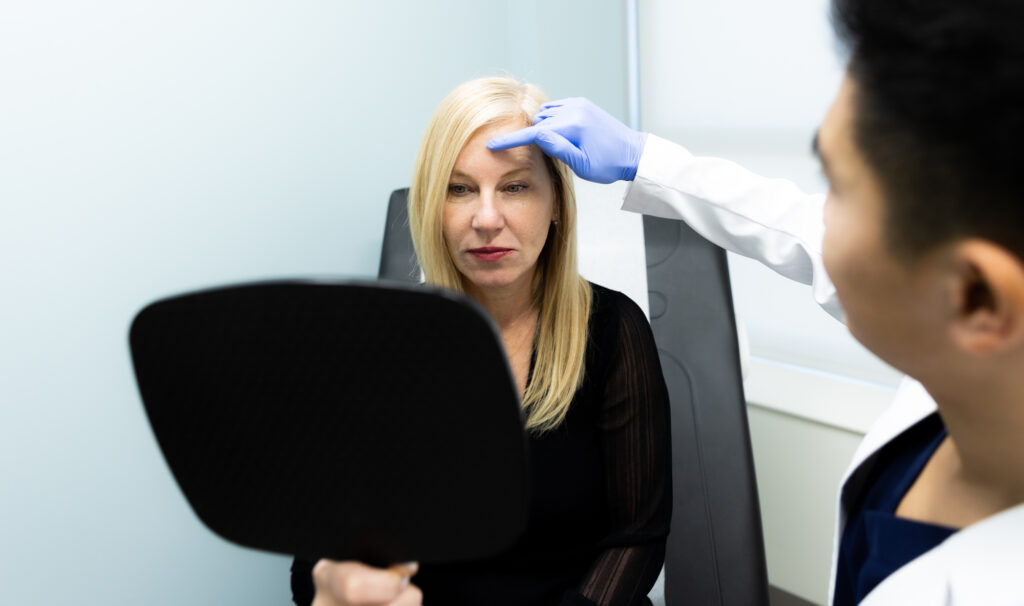
As with any medical or aesthetic treatment, you should undergo a careful analysis of your goals, health history, and expectations before starting PRP. Our thoughtful consultation evaluates all of these factors together, so you can move forward with clarity.
If you’re considering our PRP injections in Johnson County, KS, schedule a personalized consultation. At Kansas City Skin & Cancer Center, we take the time to understand your concerns and help you find treatments that are both effective and safe.
Take the first step towards a more informed, personalized approach to care with PRP.