Skin cancer remains the most common cancer diagnosed in the United States and worldwide. The Skin Cancer Foundation estimates that 1 in 5 Americans will develop skin cancer by age 70, and about 20 people in the U.S. die from it each day.
While those numbers are serious, consider an important counterpoint: When identified early, most skin cancers are highly treatable and often curable.
For many patients, treatment includes the Mohs procedure for skin cancer, a highly precise surgical technique designed to remove cancerous cells while preserving as much healthy tissue as possible.
At Kansas City Skin and Cancer Center in Johnson County, KS, our team performs Mohs surgery to treat eligible skin cancers on sensitive areas of the face and body where both accuracy and cosmetic outcomes matter.
In this blog, we break down how Mohs surgery works and why it is widely considered the gold standard in skin cancer treatment.
Mohs Surgery: Precision-Based Treatment for Skin Cancer
Developed in the 1930s, Mohs surgery is a specialized technique used primarily to treat basal cell carcinoma (BCC) and squamous cell carcinoma (SCC), the 2 most common types of skin cancer.
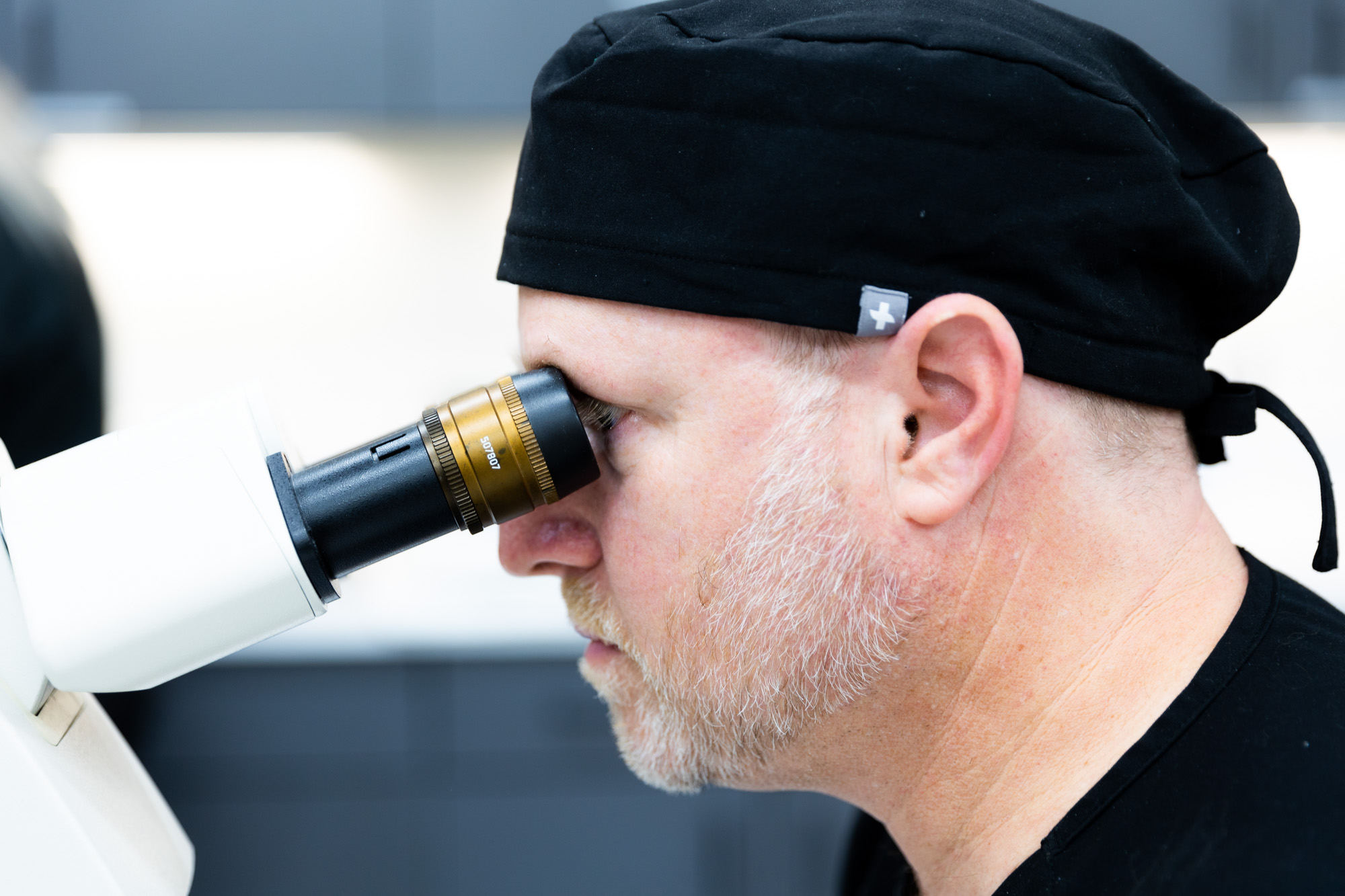
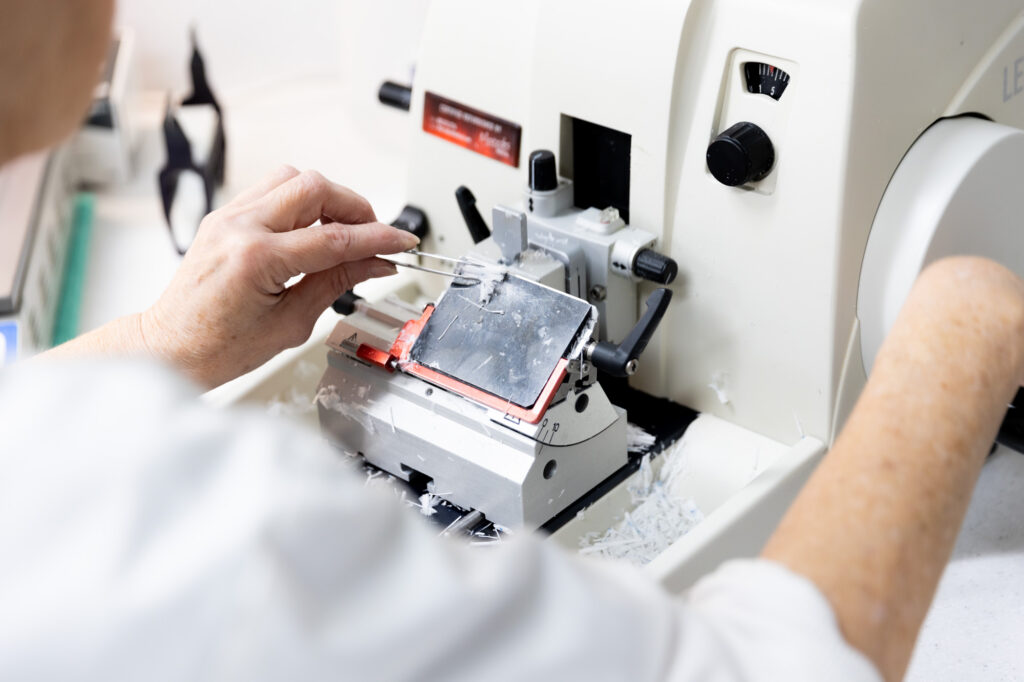
During this procedure, a surgical dermatologist removes visible cancer in thin, controlled layers. After lifting away each layer, the surgeon immediately examines it under a microscope to check for remaining cancer cells.
If cancer is still present, the surgeon removes another precise layer only from the affected area. This cycle continues until no cancer cells remain. Unlike traditional excision, which removes a predetermined margin of tissue, Mohs surgery evaluates the surgical margins in real time.
Commonly Asked Questions About Mohs Surgery
Below are answers to the most common questions about Mohs surgery.
Does Mohs surgery preserve tissue?
One of the key advantages of the Mohs procedure is its ability to preserve healthy tissue. Because the surgery only cuts away tissue that contains cancer cells, it minimizes the unnecessary removal of surrounding healthy skin.
This approach helps preserve the most function and appearance when treating areas such as the nose, eyelids, lips, ears, and hands, where tissue volume affects the most.
Does Mohs surgery have a high cure rate?
Mohs surgery is associated with some of the highest cure rates in dermatologic oncology, with cure rates up to 99% for new cases of both BCC and SCC.
That success rate comes from one key factor: immediate microscopic evaluation.
Will skin cancer come back after Mohs surgery?
Because Mohs surgery examines the entire margin of any removed tissue during the procedure, it significantly reduces the likelihood of recurrence compared to standard excision.
Traditional methods rely on lab processing that can take days, and those might consider only sample portions of the margin. Mohs evaluates the full edge of each layer in real time, allowing for immediate correction if any cancer cells remain.
Schedule Your Skin Cancer Screening
Routine skin checks help identify skin cancer and skin cancer symptoms at their earliest stages. The earlier we catch a cancer spot, the more effective and less invasive the treatment it requires. Any new, changing, or non-healing lesion should be evaluated promptly.
If you would like to schedule a skin cancer screening or learn more about the Mohs procedure for skin cancer in Johnson County, KS, Kansas City Skin & Cancer Center is here to help. We provide care across the Northland, the Plaza, and in Shawnee Mission.
Schedule a consultation with our team to determine if Mohs surgery is the best option for your care.
Contact Us
Virtual Consultation